
If you spend any time online, you’ll eventually see someone dismiss Noah’s flood with a wave of the hand: “That’s just another ancient myth. The Bible authors simply copied it from Gilgamesh and other pagan stories.” For years as an atheist, I would have said the same thing. The flood account in Genesis looked to me like a late, warmed‑over version of earlier legends from the ancient Near East.
For years as an atheist, I would have said the same thing. The flood account in Genesis looked to me like a late, warmed‑over version of earlier legends
Share on X
But when I finally took the time to look at the actual texts—and to think about them the way I would think about witness statements in a cold case—the picture became more interesting. Instead of seeing “one real story and two fakes,” I started to see something else: multiple independent cultures trying to describe the same ancient catastrophe.
We have hundreds of flood traditions scattered across the globe. You find them in Mesopotamia, Egypt, Greece, India, China, the Pacific Islands, and among Native peoples in North and South America. When you plot them on a map, they tend to cluster around the ancient Near East and then fan out along the same routes human migration appears to have taken over time.
What’s striking is how many core elements keep showing up: a catastrophic flood, a favored family that survives, advance warning, divine judgment, a boat, animals preserved, and a mountain as the final resting place of the boat. The details differ, but the basic storyline is surprisingly stable.
That’s exactly what you’d expect if a real, devastating flood occurred very early in human history and the survivors carried that memory with them as they spread out, retold it in their own languages, and filtered it through their own local ideas about God.
Critics like to focus on two of the oldest and best‑preserved Near Eastern accounts: Atrahasis and the Epic of Gilgamesh. Both are older in written form than our earliest manuscripts of Genesis, and both include a flood, a boat, animals, and survival. On the surface, that looks like evidence that Genesis is derivative.
But slow down and look at the differences, not just the similarities.
In Atrahasis, humans are created as replacement laborers. Lesser gods are tired of digging canals, revolt, and the higher gods respond by making humans out of clay mixed with the blood of a slain god. Over time humans become too numerous and noisy. One of the gods is annoyed by the racket, so he sends plague, famine, and drought to thin the herd. Each time, a hero is tipped off and manages to appease the relevant deity, until finally a flood is sent to wipe everyone out.
The motive here isn’t moral evil; it’s irritation and convenience. The gods are petty, fearful, hungry, and divided. They need humans to feed them. They argue among themselves. The survivors build a boat (a rectangular barge sealed with pitch), ride out a short, violent flood, and afterwards the gods swarm the sacrifice “like flies” because they’ve been starving without offerings. Population control is then managed with shorter lifespans, infertility, and infant mortality.
In Gilgamesh, the flood story is embedded in a larger quest for immortality. Once again, the gods decide to destroy noisy humans. A key figure, Utnapishtim, is secretly warned, told to build an oddly proportioned square boat, and to load it with people and animals. The gods panic during the flood, flee to the heavens, and later regret how extreme their own judgment was. Utnapishtim and his wife are granted immortality and placed at the edge of the world.
Yes, you see echoes: a flood, a boat, birds sent out, a sacrifice at the end. But the theology and morality are radically different from Genesis.
In Genesis, the flood is explicitly tied to human evil and violence, not to “too much noise.” The earth is “filled with violence.” Every inclination of the human heart is described as continually evil. A single, holy God—not a bickering committee of needy deities—judges His creation. Humans bear His image, which is why their corruption matters. Noah is described as righteous and blameless in his generation, walking with God.
The Biblical ark itself is different, and the differences are important. The dimensions of Noah’s vessel (given in cubits) describe a stable barge with a roughly 6:1 length‑to‑width ratio, which is what you still see in large cargo vessels today. The vessel is a reasonably proportioned barge. By contrast, the perfect cube or awkward rectangular vessels described in the other accounts would not be seaworthy. In addition, the Genesis account offers a plausible mechanism for the flood itself: “fountains of the great deep” burst forth, “windows of heaven” open, and heavy rain continues forty days and nights, with waters prevailing on the earth for a much longer period before they recede.
At the end, Noah also releases birds, offers a sacrifice, and receives a covenant. God promises stability, gives the sign of the rainbow, and reaffirms human dignity with a call to “be fruitful and multiply.” The reason for the judgment is moral, the action is measured, and the aftermath is ordered.
So, what are we looking at when we compare and assess these accounts? Instead of one true story and two “lies,” we see three cultural memories of the same catastrophic event. The “what” being described in these accounts is broadly similar; the “why” being offered diverges as each culture drapes the event with its own gods, morals, and fears. In that light, Genesis doesn’t look like a clumsy copy. It looks like the version that best fits a holy God, a meaningful human identity, a realistic explanation, and a coherent moral universe.
For a deeper discussion of the ancient Biblical flood account, please listen to our podcast:
Here is the audio podcast (the Cold-Case Christianity Weekly Podcast is located on iTunes or our RSS Feed):
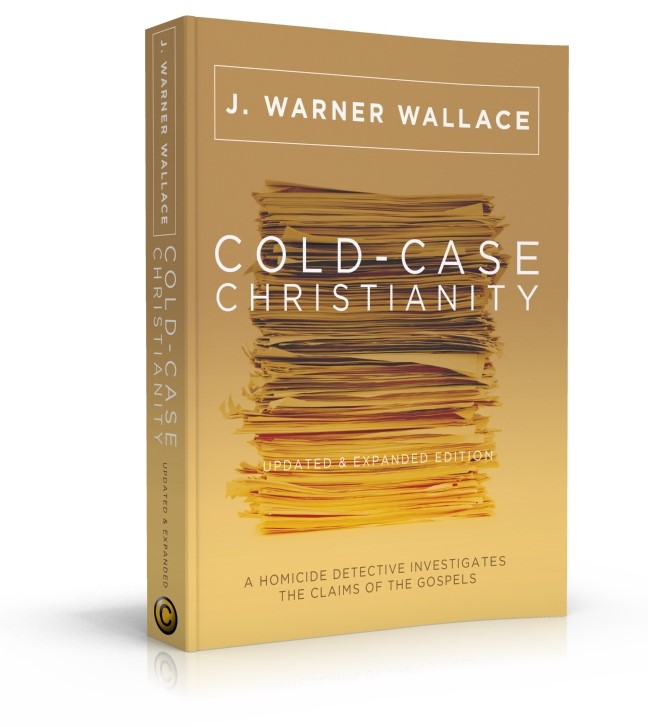
For more information about the reliability of the New Testament gospels and the case for Christianity, please read Cold-Case Christianity: A Homicide Detective Investigates the Claims of the Gospels. This book teaches readers ten principles of cold-case investigations and applies these strategies to investigate the claims of the gospel authors. The book is accompanied by an eight-session Cold-Case Christianity DVD Set (and Participant’s Guide) to help individuals or small groups examine the evidence and make the case.
The post Noah, Gilgamesh, and the Flood: Are They All Remembering the Same Disaster? first appeared on Cold Case Christianity.
Cold Case Christianity