
Detectives think about eyewitnesses very differently than most people. In a criminal case, a conviction can hinge on whether a jury finds a witness believable, so investigators learn to probe, test, and corroborate testimony instead of accepting it at face value. That same mindset can be applied to the New Testament accounts of Jesus. Rather than treating the Gospels as a collection of religious sayings, a detective sees them as a set of eyewitness reports that must be examined carefully, compared closely, and evaluated as if truth and justice depend on getting it right.
In a criminal case, a conviction can hinge on whether a jury finds a witness believable, so investigators learn to probe, test, and corroborate testimony instead of accepting it at face value. That same mindset can be applied to the…
Share on X
In an investigation, the first question is not “Do I like this witness?” but “Is this witness reliable?” Detectives know that honest witnesses can be mistaken, dishonest witnesses can blend truth with lies, and even accurate witnesses never tell the whole story in one sitting. When approaching the Gospels, the detective mindset resists the temptation to dismiss them because they are ancient or religious. Instead, it asks the same questions that would be asked of any witness: Were these accounts written early enough to be close to the events? Do they display the kind of detail and perspective expected from someone who either saw the events or spoke to those who did? Are there signs of intentional deception or corruption, or do they look like consistently sincere attempts to report what happened? Were the eyewitnesses motivated to lie about their claims?
A second key principle is that apparent differences in eyewitness accounts are not automatically contradictions; they are often exactly what one would expect from multiple observers. In real cases, one witness mentions a detail another omits, one focuses on what was said while another remembers where people were standing, and timelines might be ordered slightly differently depending on perspective. Detectives expect this kind of variation because people experience events through their own mental “camera angles.” When reading the Gospels, the same principle applies. The presence of different emphases or sequences does not immediately undermine reliability. In fact, it often points away from collusion and toward authentic, independent testimony.
At the same time, detectives look for places where witness accounts intersect in subtle, unintended ways. These are the little overlaps that are hard to fake. One witness might mention that a suspect limped out of a room, while another, interviewed separately, explains that the suspect had recently injured his leg. Each testimony covers different ground, but together they form a more complete picture. When approaching the Gospel accounts with this mindset, the reader starts to notice how one writer’s mention of a location, custom, or side detail quietly explains something that another writer simply assumes. This pattern of interlocking but not identical testimony is one of the features that detectives find especially compelling in real investigations.
Corroboration is also critically important. Investigators never build a case on testimony alone if they can help it; they look for physical evidence, documents, timelines, and outside confirmation that either supports or challenges what witnesses claim. Applied to Jesus, this means asking whether the broad strokes of the Gospel story line up with what is known from history, archaeology, and the cultural context of the first century. A detective-minded reader is not satisfied with vague spiritual impressions. The question becomes: do the names, places, political figures, and religious practices described in these accounts fit what is known about that time and region? When multiple streams of information converge, confidence in the witnesses grows.
Detectives also pay attention to motive, bias, and cost. In criminal work, a witness who gains money, status, or safety by lying about a suspect is viewed with suspicion, while one who risks something by testifying appears more credible. When considering the early Christian witnesses, the same logic applies. These men and women did not gain wealth or power by proclaiming that Jesus rose from the dead and is Lord. In many cases, they gained persecution, imprisonment, or death. A detective asks: what did these witnesses stand to gain by inventing a story, and what did they experience as a result of their testimony? This line of reasoning does not prove everything by itself, but it shapes how seriously their claims should be taken.
Finally, detectives never forget that real cases are solved by following the evidence, not by forcing the evidence to fit a preferred narrative. The challenge, then, is to read the eyewitness accounts of Jesus with the same disciplined curiosity and fairness. Set aside, for a moment, personal preferences about what kind of spiritual story would be comforting or convenient. Approach the Gospels as reports that must be tested, weighed, and judged. Ask whether they bear the marks of honest, early, and corroborated testimony. Ask whether the lives of the witnesses make sense if their story is false. In the end, thinking like a detective about eyewitness reliability does not remove the need for faith, but it can show that Christian faith is rooted in serious, examinable claims about what truly happened in history.
For more information on this topic, watch my interview with Thinking Matters.
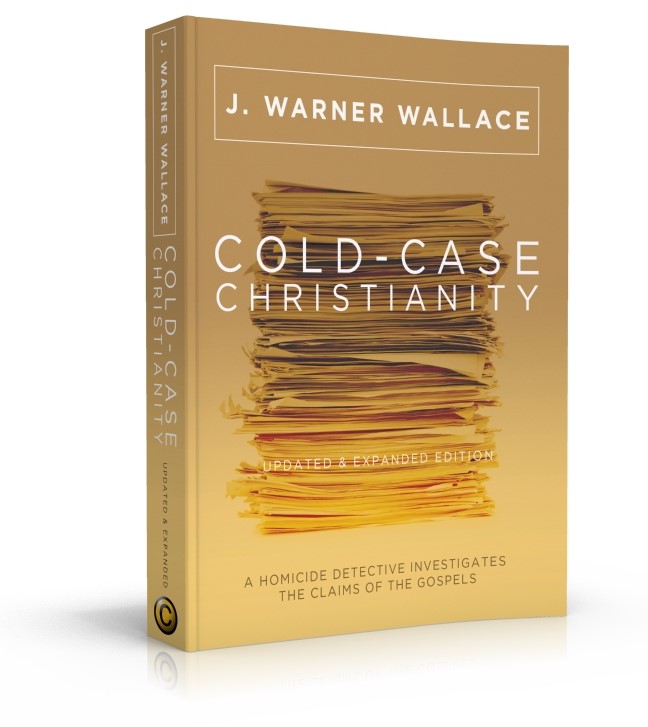
For more information about the reliability of the New Testament gospels and the case for Christianity, please read Cold-Case Christianity: A Homicide Detective Investigates the Claims of the Gospels. This book teaches readers ten principles of cold-case investigations and applies these strategies to investigate the claims of the gospel authors. The book is accompanied by an eight-session Cold-Case Christianity DVD Set (and Participant’s Guide) to help individuals or small groups examine the evidence and make the case.
The post How Detectives Read the Gospels: The Eyewitness Test You’ve Never Tried first appeared on Cold Case Christianity.
Cold Case Christianity