
When I first began investigating the Gospels, I wasn’t a believer. In fact, I didn’t even own a Bible. My journey started when a pastor said something that caught my attention—he claimed that Jesus was the smartest person who ever lived. That statement intrigued me enough to go out and buy a Bible for the first time. My initial goal wasn’t faith or theology; I simply wanted to mine the wisdom of Jesus. I wanted to see if His words really reflected that level of intelligence.
But something unexpected happened as I read through the four Gospel accounts. I realized that these weren’t written as moral fables or symbolic literature—they were written as eyewitness accounts. The authors described people, places, and events as though they either saw them firsthand or interviewed someone who did. They weren’t just trying to communicate spiritual truths; they were grounding those truths in reported history.
Of course, as I compared the accounts, I noticed differences in how events were described. Many critics call these differences “contradictions.” But as an investigator, I had a very different reaction. I had been working criminal cases for years by then and had interviewed thousands of witnesses. I had never once had two witnesses describe an event in exactly the same way. Not once.
In fact, when witnesses’ testimonies line up too perfectly, that’s a red flag. It usually tells me that they’ve talked to each other and synced their stories. Defense attorneys know this well—they love to pounce on differences between witnesses, hoping to convince a jury that discrepancies mean the witnesses can’t be trusted. But any experienced detective knows that real eyewitness testimony always has variation. That’s just how truth-telling works when seen from multiple perspectives.
Every witness brings a unique lens to the scene. One might notice the clothing people wore, while another is fixated on what was said. One may have an interest in vehicles, while another focuses on emotional expressions. The same event can look entirely different depending on what draws that person’s attention. Sometimes I’d find myself wondering if two people attended the same crime scene at all because their accounts differed so much—but the truth is, both were accurate pieces of a larger whole.
That’s why, as a detective, my job isn’t to discard differing statements—it’s to piece them together into a unified, robust account. By comparing perspectives and resolving apparent tensions, a clearer, fuller truth always emerges. In fact, when I arrive at a crime scene, one of the first things I tell officers is, “Separate the witnesses.” I don’t want them talking to each other before I interview them. Why? Because if they do, they’ll unconsciously align their testimonies. The truest accounts, the ones I can trust most, always contain those small variations.
As a detective, my job isn’t to discard differing statements—it’s to piece them together into a unified, robust account.
Share on X
When I applied that same logic to the Gospels, their reliability became even more evident. Yes, Matthew emphasizes things Luke doesn’t. John includes moments Mark skips. But that’s exactly what you’d expect if independent witnesses were describing the most significant events in human history. If the Gospel writers had colluded to fabricate a story, the accounts would have matched perfectly—and then I’d be suspicious.
But they didn’t. They wrote from their own vantage points, under the guidance of the Spirit, describing what they saw or learned from those who were there. Those small differences don’t undermine the truth—they authenticate it.
So when people today raise objections about the Gospels “contradicting,” I understand where they’re coming from. It’s easy, from a distance, to assume that harmony means truth and variation means error. But every detective knows it’s the other way around. Variation is a hallmark of authenticity. Perfectly mirrored stories? That’s a clue of something orchestrated.
The four Gospels reflect exactly what I’d expect from true eyewitnesses: independent voices describing the same events from unique angles. When assembled together, they form a cohesive, comprehensive picture of Jesus—the kind no one could fabricate. What once seemed like contradiction to skeptics turned out, for me, to be compelling evidence that the Gospels are true accounts of real history.
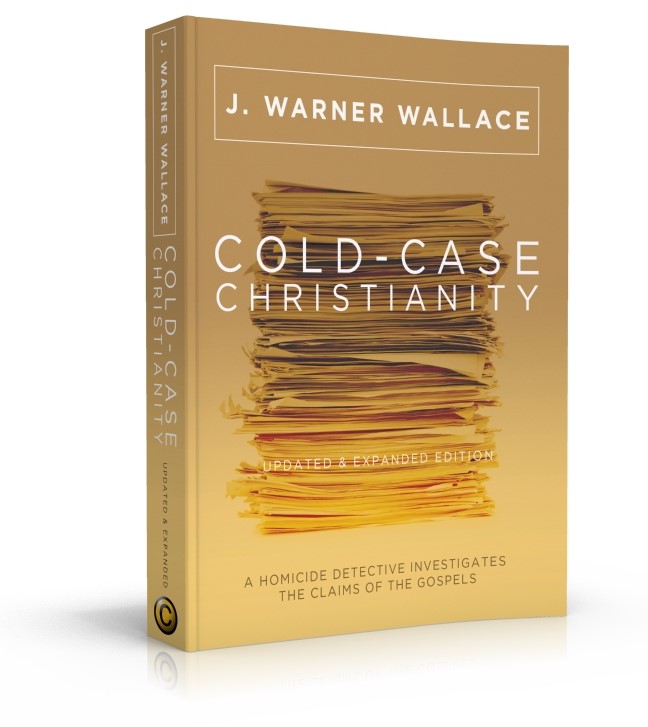
For more information about the reliability of the New Testament gospels and the case for Christianity, please read Cold-Case Christianity: A Homicide Detective Investigates the Claims of the Gospels. This book teaches readers ten principles of cold-case investigations and applies these strategies to investigate the claims of the gospel authors. The book is accompanied by an eight-session Cold-Case Christianity DVD Set (and Participant’s Guide) to help individuals or small groups examine the evidence and make the case.
The post Do the Gospels Contradict? first appeared on Cold Case Christianity.
Cold Case Christianity