
If you spend any time online, you’ll meet people who confidently call themselves Christians and yet deny the deity of Christ. They will insist they are followers of Jesus while rejecting the triune nature of God, claiming Jesus is something less than God—perhaps a special human, a high prophet, even a unique created being, but not God Himself. They’ll even quote Old Testament passages about the oneness of God to argue against the deity of Jesus.
But if you take John 1 seriously, that position simply collapses.
As a cold‑case detective, I learned that you rarely get one “smoking gun.” Instead, you develop cases on the principle of “death by a thousand paper cuts.” A thousand small but consistent lines of evidence that point repeatedly to the same reasonable conclusion. That’s what John 1 does with the deity of Christ. It quietly, relentlessly divides reality into pairs—creator and created, light and darkness, life‑giver and life‑receiver, already‑is and will‑become—and keeps putting Jesus on the God side of each pairing.
Right out of the gate we read, “In the beginning was the Word, and the Word was with God, and the Word was God.” John reaches for a term familiar to both Greek and Jewish audiences. For Greeks, the Logos was the rational principle, the underlying order of the cosmos, the pattern on which everything else rests. For Jews, the Word of the Lord was God’s active, personal self‑expression—His creative, commanding, revealing, saving power in passages like Genesis 1 and Isaiah 55, and in all those places where “the word of the Lord came” to the prophets. When John calls Jesus the Word, both groups would have understood that he was not talking about a mere man. He was pointing to the foundational, causal, creative, revealing power of God Himself, now identified with a concrete person.
John immediately introduces what looks like a dilemma unless you embrace the Trinity. The Word is with God and yet was God. He is clearly not the Father, yet He is everything that God is. Those two truths—“with” and “was”—are not a problem if one divine essence is shared by three distinct persons. That’s why the Trinitarian formulation arose so early: it wasn’t an arbitrary philosophical invention; it solved a tension created by the biblical text itself.
The Word is with God and yet was God. He is clearly not the Father, yet He is everything that God is.
Share on X
Then John raises the stakes: “Through Him all things were made; without Him nothing was made that has been made.” Now divide all reality into two categories: the uncreated Creator and everything that has been made. There is no third category of “semi‑divine, super‑creature.” Jesus cannot be in the “made” group if everything that was made was made through Him. That places Him firmly in the uncreated category, which belongs to God alone.
John goes further: “In Him was life, and that life was the light of all mankind.” In the Old Testament, there is only one ultimate source of life and light, and that is God. Life is not something God borrows; He is life and gives it. Light is not a generic metaphor; it’s a God‑term used for His presence, His revelation, His salvation, His glory. When John says life is in Jesus in that same way, and that He is the light that shines in the darkness—a light the darkness cannot overcome—he is stepping directly into the language that was used for Yahweh.
John carefully contrasts Jesus with John the Baptist. John the Baptist is simply called “a man sent from God.” That phrase could have been used for Jesus, but it isn’t. John the Baptist is a witness, a role that in the Old Testament is typically reserved for those who testify about God’s saving action and covenant faithfulness. He is not the light; he comes only to bear witness to the light. That sharp distinction tells the reader that Jesus is not in the “mere man” category, even while John still speaks of Him as entering the world.
Then comes another dividing line: “He was in the world, and though the world was made through Him, the world did not recognize Him.” The Maker of the cosmos walks into His own creation and goes unrecognized. He even comes to His own people, and they do not receive Him. Their rejection doesn’t undermine His deity; it exposes human nature—our expectations, pride, and hardened hearts. We often come to cases with pre‑existing biases. Many in the first century wanted a political liberator, a military Messiah, not a suffering, crucified one from Nazareth. That mismatch between expectation and reality blinded them to the One standing in front of them.
Finally, John says that to those who believe in His name, Jesus “gave the right to become children of God.” That kind of authority—granting the right to become God’s children, causing people to be “born of God” rather than of blood or human will—is a divine prerogative. In the Old Testament it is God Himself who claims to be the Father of His people, the One who adopts and names them. John 1 credits Jesus with exercising that role.
If you’re still trying to hold on to a “just a prophet” Jesus, John 1 won’t let you. Verse by verse, it forces you to choose: Is Jesus on the side of the Creator or the created? The Giver of life and light, or merely a receiver? The One who already is, or one who merely becomes? Once you follow John’s reasoning, the “just a prophet” option simply isn’t on the table anymore.
To learn more about the evidence for Jesus’ deity in John Chapter 1, please listen to our podcast:
Here is the audio podcast (the Cold-Case Christianity Weekly Podcast is located on iTunes or our RSS Feed):
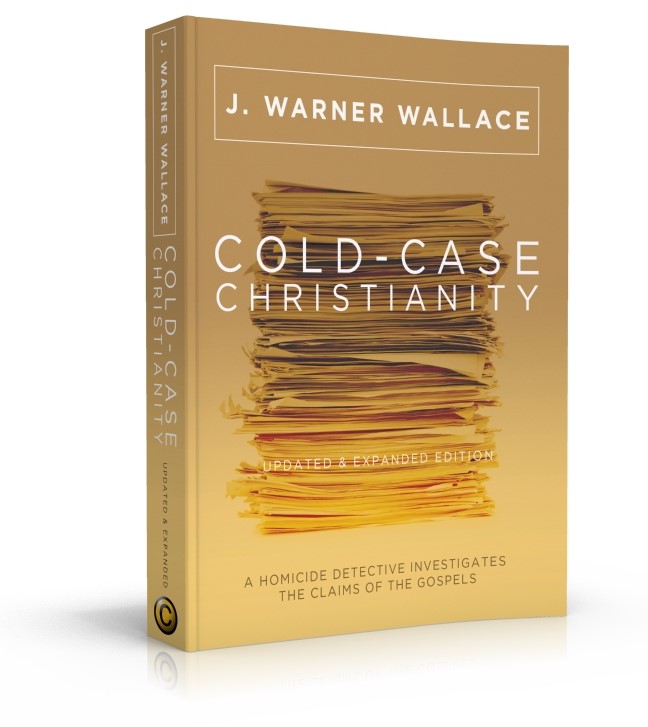
For more information about the reliability of the New Testament gospels and the case for Christianity, please read Cold-Case Christianity: A Homicide Detective Investigates the Claims of the Gospels. This book teaches readers ten principles of cold-case investigations and applies these strategies to investigate the claims of the gospel authors. The book is accompanied by an eight-session Cold-Case Christianity DVD Set (and Participant’s Guide) to help individuals or small groups examine the evidence and make the case.
The post Why “Just a Prophet” Jesus Collapses Under John 1 first appeared on Cold Case Christianity.
Cold Case Christianity