
What sets Christianity apart from every other theistic worldview is its foundation in history. Many belief systems offer beautiful wisdom and moral guidance—collections of proverbs that inspire and instruct—but they don’t rest on claims that can be examined or tested. During high school, I had a friend who was Baha’i. He introduced me to the writings of Baha’u’llah, which were profoundly thoughtful. Yet I realized something important: they were simply statements of wisdom. You can’t test a proverb. Buddhism, for instance, is full of deep insights, but no historical claims that could be investigated or verified. Christianity is different. It rises or falls on a historical event—the resurrection of Jesus.
That’s what makes Christianity unique among worldviews. It’s not just a system of moral or spiritual guidance; it’s a claim about something that actually happened in history. And that claim—the resurrection—is testable. When we examine any event from the past, what do we rely on? We turn to eyewitnesses. Eyewitness testimony is the only form of direct evidence. Everything else, whether physical evidence or circumstantial inference, is indirect. So Christianity, grounded as it is in eyewitness accounts, invites us to apply investigative methods typically reserved for cold cases or courtroom analysis.
Jesus himself appealed to evidence, both direct and indirect. He didn’t simply instruct people to believe without reason. He said, “If you don’t believe my words, at least believe because of the evidence of the miracles you’ve seen.” He put his actions forward as verifiable signs. But then he went further—he intentionally selected followers who would serve as eyewitnesses to what he did and taught. Their mission wasn’t to share philosophical reflections, but to testify to what they had seen with their own eyes.
In Acts chapter one, after Judas had fallen away, the disciples needed to select someone to take his place. But they didn’t just pick anyone who believed in Jesus’ message. They established a specific criterion: the person had to have been present from the baptism of Jesus through to the resurrection. In other words, the replacement had to be an eyewitness. That deliberate focus on firsthand testimony was crucial to the credibility of their mission. These early followers weren’t just spreading ideas; they were reporting on real, observable events.
Throughout the book of Acts, we see the same pattern repeated. The apostles traveled across the ancient world proclaiming not abstract philosophy, but eyewitness testimony. They’d explain how the prophecies of the Old Testament were fulfilled, and then they’d add, “We saw these things happen.” Their conviction was rooted in personal observation, not in speculative faith.
Even the structure of the New Testament reflects this dependence on eyewitness credibility. Not every ancient Christian writing made it into the canon. Some early works, like the Shepherd of Hermas and First Clement, were widely read and valued in local congregations. They contained moving reflections and teachings, but they weren’t written by eyewitnesses. That’s precisely why they didn’t become part of Scripture. Only those accounts that could be traced back to direct witnesses of Jesus’ ministry were included. God, in his wisdom, preserved those texts because eyewitness testimony can be investigated. It can be measured by tests of historical reliability: Were the witnesses really present? Can their claims be corroborated by external evidence? Did they show bias or personal gain? Did their story change over time? These are the same investigative questions we use when evaluating any case.
As a detective, I’ve spent years assessing the reliability of witnesses. In many ways, the Christian faith invites that same scrutiny. It’s not fragile. It’s not afraid of questions. In fact, Christianity stands uniquely testable among worldviews precisely because it’s rooted in eyewitness accounts that can be examined for truth. That’s the strength of our faith. We follow a God who acted in history, leaving behind evidence that reasonable people can investigate and verify.
Christianity stands uniquely testable among worldviews precisely because it’s rooted in eyewitness accounts that can be examined for truth.
Share on X
When you embrace Christianity, you’re not stepping into the dark. You’re stepping toward truth that has been seen, recorded, and preserved by those who were there. That’s why eyewitness testimony isn’t just important—it’s the bedrock of our faith.
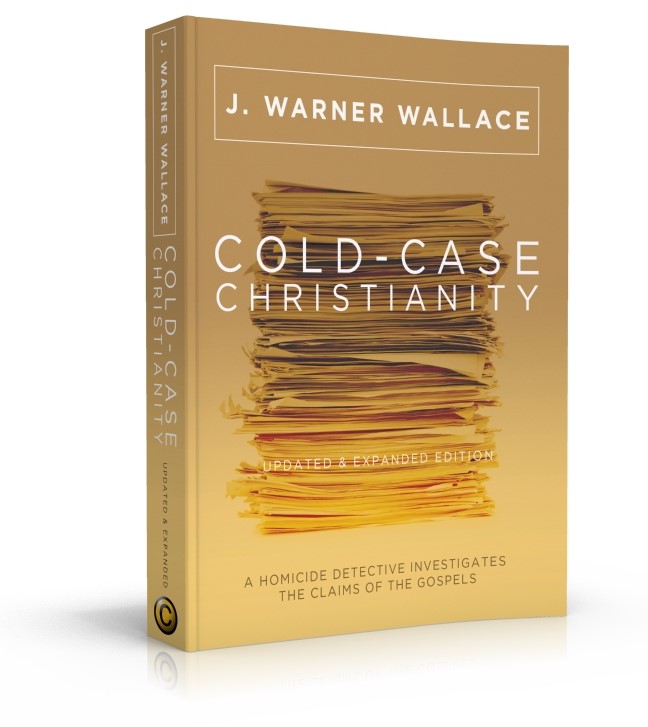
For more information about the reliability of the New Testament gospels and the case for Christianity, please read Cold-Case Christianity: A Homicide Detective Investigates the Claims of the Gospels. This book teaches readers ten principles of cold-case investigations and applies these strategies to investigate the claims of the gospel authors. The book is accompanied by an eight-session Cold-Case Christianity DVD Set (and Participant’s Guide) to help individuals or small groups examine the evidence and make the case.
The post Why Is the Biblical Eyewitness Testimony So Important? appeared first on Cold Case Christianity.
Cold Case Christianity