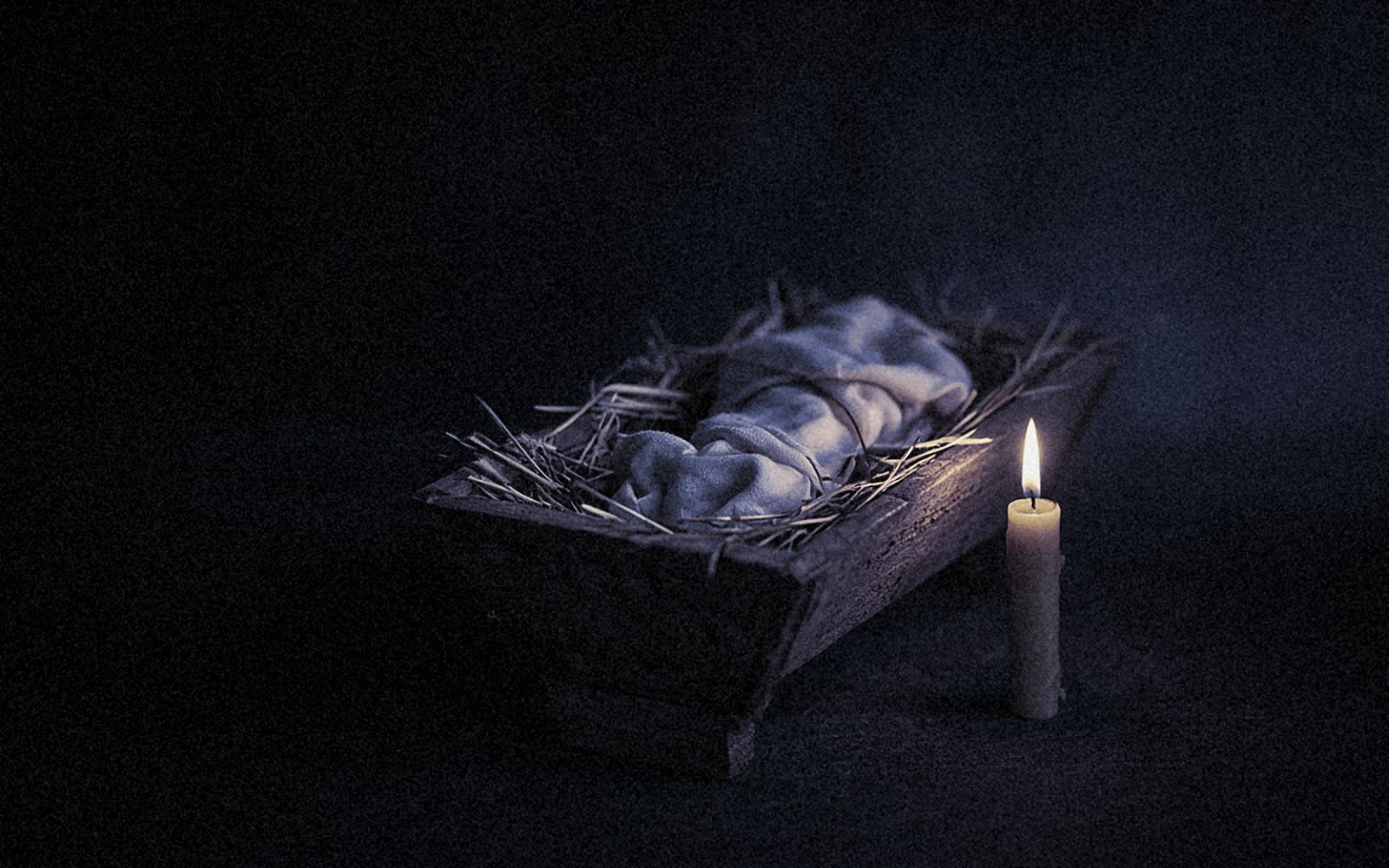

Can I be honest with you? A lot of us treat Christmas like a mood we’re trying to get back. The lights come on, the songs start up, and we go hunting for that feeling. A little warmth. A little peace. Maybe one week that doesn’t feel like the rest of the year.
I’m not here to scold you for liking a well-lit tree. Enjoy it. But if that’s all this is, we’ve missed it. Badly.
Christmas is a doctrine. It is a claim about the living God. The church has a word for it: the incarnation. The eternal Son of God became truly human, without ceasing to be truly God, for us and for our salvation.
John doesn’t start his Gospel in a manger. He starts in eternity:
“In the beginning was the Word, and the Word was with God, and the Word was God” (John 1:1).
Then he writes the sentence that ought to stop us cold in December:
“And the Word became flesh and dwelt among us, and we have seen his glory, glory as of the only Son from the Father, full of grace and truth” (John 1:14).
The Word did not become an idea. He became flesh. He didn’t drop in as a symbol and bounce back to heaven. He dwelt among us. That’s tabernacle language. God pitched his tent with his people. In Jesus, that dwelling is personal, visible, and tied to our humanity for good.
The Son who chose to come
We didn’t invent this story, and Jesus didn’t stumble into it. Paul says that Christ, “though he was in the form of God, did not count equality with God a thing to be grasped, but emptied himself, by taking the form of a servant, being born in the likeness of men” (Philippians 2:6-7). He humbled himself “by becoming obedient to the point of death, even death on a cross” (Philippians 2:8).
Christmas and Good Friday belong together. Don’t let anyone pull them apart. The Child was born to die, and to rise. John Piper has a fine essay on Hebrews 2 that gets at this, Christmas Happened Because It Is Fitting. The incarnation wasn’t a last-minute rescue plan God threw together when things got out of hand. It was fitting. It matches who God is. And it was necessary for what we needed.
Why he had to take on flesh
Hebrews tells us why the Son took our nature:
“Since therefore the children share in flesh and blood, he himself likewise partook of the same things, that through death he might destroy the one who has the power of death, that is, the devil, and deliver all those who through fear of death were subject to lifelong slavery” (Hebrews 2:14-15).
He became like us so that he could die for us. Think about that. God, as God alone, cannot die. The Son took a true human nature so that he might be “a merciful and faithful high priest,” and “make propitiation for the sins of the people” (Hebrews 2:17).
This is why the church has been careful with her words. We’re not free to get sloppy here. The Nicene Creed confesses that the Son is true God from true God, begotten not made, and that for us and for our salvation he came down from heaven and was made man. Not half God and half man. One person, Jesus Christ, fully God and fully man.
In the fourth century, Athanasius wrote, “For He was made man that we might be made God” (On the Incarnation, 54). That line can startle modern readers, and it should be read carefully. He did not mean that we become a fourth member of the Trinity. He meant that in Christ we are brought into the life of God: forgiven, adopted, and made new. The incarnation is not a curiosity for theologians with too much time on their hands. It is the doorway of our salvation.
God with us
Matthew tells us that the birth of Jesus fulfilled the word of the prophet: “Behold, the virgin shall conceive and bear a son, and they shall call his name Immanuel” (which means, God with us) (Matthew 1:23).
Paul says the same mystery another way: “But when the fullness of time had come, God sent forth his Son, born of woman, born under the law, to redeem those who were under the law, so that we might receive adoption as sons” (Galatians 4:4-5).
Born of a woman. Born under the law. Sent by the Father. This is not myth dressed up as history. It is history that reveals the heart of God. He didn’t come as a vague spiritual presence we can shape however we like. He came as a particular child, in a particular place, to a particular people, in the fullness of time.
Every December you’ll hear that Christmas is just a useful legend, that the feast is mostly leftover pagan midwinter custom, or that the “real meaning” is generosity, family, or peace on earth in the abstract. Those claims are not all equally serious, and some of them have a bit of cultural history behind them. But they still miss the root. The fruits of the season matter. The root is a person. God has come near in Jesus Christ.
The Lion who became flesh
The name of this site points first to Christ, not to a brand. In the vision of Revelation, one of the elders says, “Weep no more; behold, the Lion of the tribe of Judah, the Root of David, has conquered” (Revelation 5:5). The next verses show that Lion as a Lamb who was slain. Power and meekness, in one Lord.
That’s the shape of Christmas. The Lion did not stop being the Lion when he was laid in a manger. He veiled his glory, and then he revealed it in grace and truth. This baby is not a softer, safer version of God. He is God the Son, come to conquer sin, death, and the devil by taking our flesh and bearing our judgment.
What this doctrine asks of us
If Christmas is a doctrine, then Advent is not just a countdown to presents. It is a call to believe, to worship, and to be formed.
Advent has always looked in two directions. We remember that the Son has already come in the flesh, and we wait for him to come again in glory. The same Lord who was laid in a manger will return as Judge and King. Christmas is not an escape from the world. It is a promise about the world. The Word became flesh, and he will make all things new.
So believe the claim. Jesus is not merely a moral teacher we admire in December and forget in January. He is the Word made flesh, the only Mediator between God and man. “I am the way, and the truth, and the life. No one comes to the Father except through me” (John 14:6). And he says, “Whoever has seen me has seen the Father” (John 14:9).
Worship with a clear mind and a glad heart. Sing the carols. Light the candles. Gather at the table. But let the words mean what they say. When Charles Wesley wrote, “Veiled in flesh the Godhead see,” he wasn’t tossing out a pretty line for a December mood. He was teaching the church to confess the incarnation.
And live like people who have been visited. If God has come this near, then no part of human life is too ordinary for holiness. Classrooms. Kitchens. Locker rooms. Hospital halls. The incarnation tells us our bodies, our work, and our neighbors matter.
This Advent, I’m not asking you to feel more than you feel. Feelings come and go. I’m asking you to look at Jesus. Read John 1 and Luke 2 slowly. Read Hebrews 2. Talk about these things with your children and your students, not only about gifts and plans. For a fresh Advent reflection on the Lord’s unexpected timetable, see Collin Hansen, On Christmas, God Shook Up the World.
If you came for the lights, fine. Just don’t walk past the doctrine. The Word became flesh. That is good news.
Scripture quotations are from the ESV.