



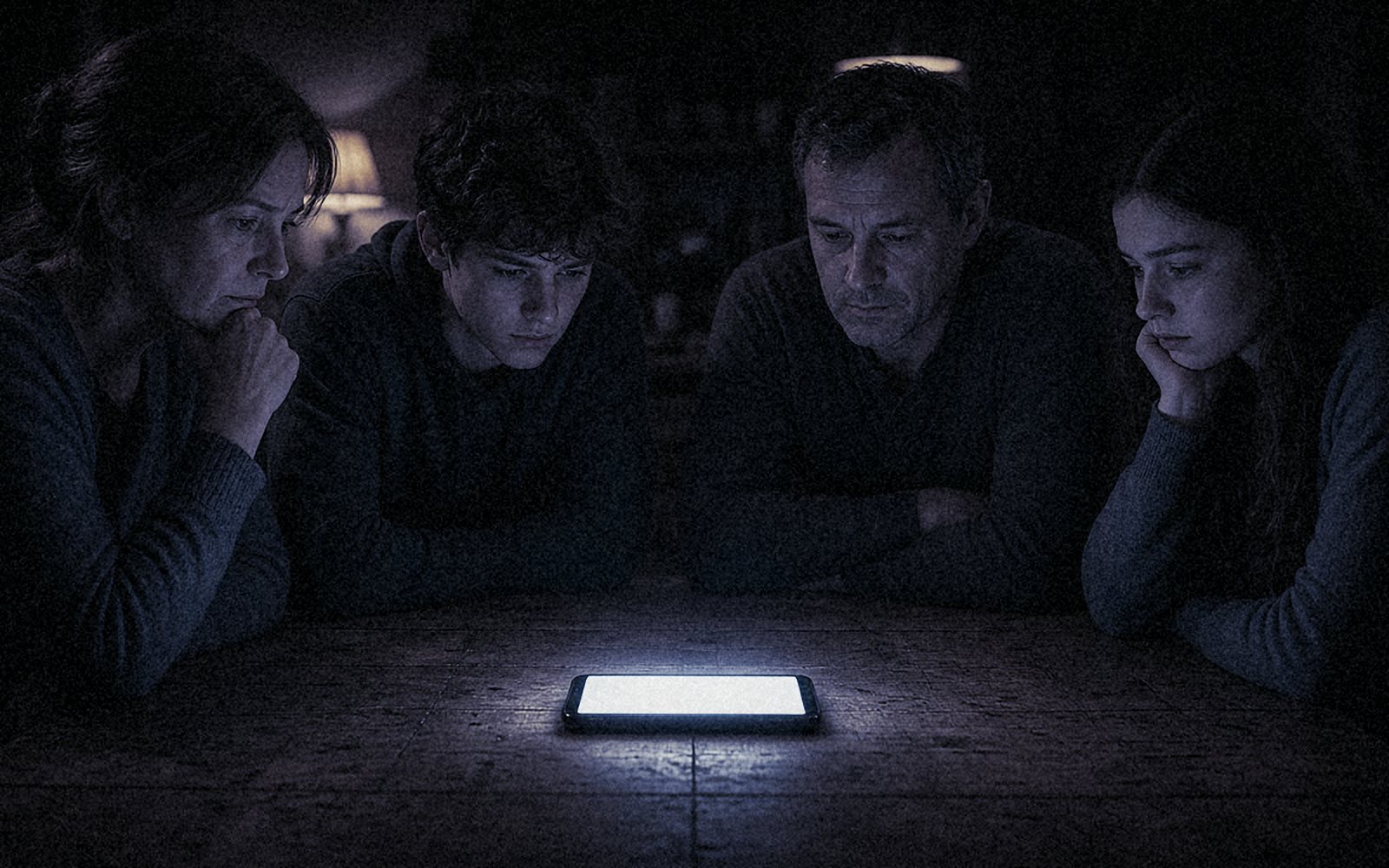
Your teenager sets a phone on the kitchen table. A short video shows a student being mocked while everyone around him laughs. Your teen asks, “Did you see this?”
You could tell them to put the phone away. Sometimes that’s the right call. But before you do, ask what they saw. Then ask what they think happened before the camera started rolling.
That’s an opening for discipleship.
Our children can see more of the world in an afternoon than we could have imagined at their age. A hard story lands in a feed, and before they’ve had time to think, someone in the comments has already told them what it means. The same thing happens with a headline, a claim in class, or a version of history that leaves God out of the story altogether. We can set wise limits on what comes through the screen. We also need to teach them what to do with what gets through.
Give them the whole story
A worldview is the set of beliefs you rely on when you answer the basic questions. Who am I? What’s wrong with the world? What would make it right? Everyone has one, whether they’ve named it or not. The only question is whether it’s true.
Scripture answers those questions with a story that runs from creation to restoration. It is a lens, not a pair of rose-colored glasses. It doesn’t hide what’s ugly. It tells you what the ugly thing is, and what God has done about it.
Creation: God made the world good, and he made human beings in his image (Genesis 1:26-31). The student in the video bears God’s image. So does the person who posted it. Their dignity doesn’t rise or fall with the comments.
Fall: Our rebellion against God has touched every part of life (Genesis 3; Romans 8:20-22). The cruelty in the clip shouldn’t surprise us. Neither should our own appetite for watching it. We ought to ask why a stranger’s humiliation can so easily become our entertainment. The same Fall helps us read history and the day’s news without the two mistakes we keep making: pretending people are basically good, or concluding that darkness gets the last word.
Redemption: Jesus died for our sins and rose from the dead (1 Corinthians 15:3-4). The gospel gives us a reason to admit our own sin instead of locating all the evil on the other side of the screen. It also gives us a reason to seek forgiveness and make things right when we’ve joined in.
Restoration: Christ will make all things new (Revelation 21:1-5). We can look honestly at suffering without making peace with it or giving in to despair. The worst thing your child saw today will not have the last word.
Ask questions they can use when you’re not there
Next time your child brings you a story, start by listening. You may find they’re less interested in your opinion of the clip than in whether you understand why it bothered them. Once you’ve heard them out, try working through three questions together:
- What do we actually know? Separate what the clip shows from what the caption claims. If we can’t tell, it’s fine to say so and wait before sharing it.
- What does Scripture help us see? In this case, start with Genesis 1:27. How does bearing God’s image change what we owe a person we’ve never met?
- What would it look like to love our neighbor here? Sometimes that means refusing to forward the video. If the student is someone they know, it might mean checking on them or telling a trusted adult.
These questions work just as well on a headline, a history lesson, or a claim your child heard in class. They work best when our children see us use them too. Let them hear you say, “I shared that too quickly,” or, “I was so angry about the story that I didn’t stop to see if it was true.” That is what repentance and a love of the truth look like at home. They will remember that longer than they remember your take on the clip.
Start with the conversation you already have
Paul tells us not to be conformed to this world, but to be transformed by the renewal of our minds (Romans 12:2). That renewal has to happen somewhere. Deuteronomy 6:6-7 puts the teaching of God’s words into the ordinary rhythms of family life: “And these words that I command you today shall be on your heart. You shall teach them diligently to your children, and shall talk of them when you sit in your house, and when you walk by the way, and when you lie down, and when you rise.”
Christian schools and churches can come alongside that work, and they should. But they cannot replace it. Parents have opportunities no classroom or youth group can match. The ride home. The conversation after practice. The moment your child sets a phone down in front of you.
Pick one of those moments this week. Ask your child what they saw that they’re still thinking about. Open Scripture together and talk about one way they could respond. You don’t have to answer everything that night. You’re helping them learn where to turn the next time something in the world doesn’t make sense.
For more on what it looks like to live out that faith at school, at home, and online, read Chosen and Set Apart: Living 1 Peter 2:9 in Public.
Adapted from my February 11, 2023, column in the Salisbury Post.
Scripture quotations are from the ESV.